

Autonomous Systems, Robotics and Physical AI
Drones · UGVs · Automated Mobility · Safety and Security
specializing in drones, unmanned ground vehicles, automated mobility, and security applications
Autobotik helps organizations develop new products, enter new markets and prepare for physical AI - intelligent systems that sense, decide and act in the real world. Our international team brings experience in automated driving, robotics, perception, electrification and safety assurance, complemented by expertise in AR, VR and digital twins. We connect technology strategy, product development and organizational capability with customer requirements and commercial opportunities.
our approach
Autonomous systems must work in the environments and missions for which they are intended.
We start with the application and the customer: what must the system do, where must it operate, and what makes it valuable? We assess your technology, engineering capabilities and operational requirements to identify what can be reused, what needs adapting and where new expertise is required. Together with your team, we develop a practical plan connecting product differentiation, system architecture, safety validation, partnerships and market entry. We help build the organizational capability needed to deliver that plan.
what we do
Technology Adaptation for Robotics and Drones
Adapt proven sensing, controls, embedded software and electrification technologies for drones, unmanned ground vehicles and robotic systems. We identify what can transfer and re-engineer what must change for new missions and operating environments.
Preparing for Physical AI
Turn AI opportunities into practical product and engineering plans. We define use cases, architectures, data and simulation needs, and validation priorities for systems that perceive, make decisions and act in the physical world.
Safe Deployment of Automated Vehicles
Use the Resembler platform and its accident and incident database to assess deployment areas, identify relevant risks and develop verification test plans. We connect safety evidence with vehicle capabilities and operating conditions.
Product Engineering and Market Strategy
Define technical differentiators, customer use cases and new product families. We connect product plans, technology roadmaps and go-to-market strategies with development resources and commercial priorities.
UGV and Drone Capability Development
Build the teams, processes and partnerships needed to establish a UGV or drone product line. We assess capability gaps, define engineering responsibilities and develop a phased plan for acquiring the required expertise.
AR, VR and Digital Twins
Develop digital twins, interactive environments and human-machine interfaces for design, simulation, training and operational planning. We help teams explore complex systems and evaluate how people will interact with them.
Business Development and Sales Support
Support customer engagement, technical proposals and quotations in established and emerging markets. We help negotiate technical scope, warranty responsibilities and compliance requirements, aligning commercial commitments with engineering delivery.
Designing the Infrastructure for Automated Mobility
Cities, ports, airports and logistics networks are preparing for automated transport. Vehicles are only part of the system: deployment also depends on digital twins, intelligent roadside infrastructure and connected operations. For authorities, ITS and infrastructure are among the most direct ways to manage where and how automated vehicles operate.
Autobotik helps organizations plan these systems across smart cities, on-demand logistics and automated driving. We connect vehicles, infrastructure and digital services for applications ranging from hub-to-hub routes and urban delivery to airport and port operations.
We advise industry, startups, cities and public institutions on technology, system requirements, partnerships and implementation. The Resembler toolset supports this work by helping authorities and operators assess area-specific risks, plan verification and evaluate readiness for deployment.


Navigating the New Geopolitics of Supply Chains
Leveraging our deep expertise in global automotive technology and supply chain integration, Autobotik helps companies adapt to shifting trade policies, regionalized production strategies, and evolving technology ecosystems. With a long-term understanding of how innovation can be distributed across global networks, we support OEMs, Tier 1 suppliers, technology firms, and policymakers in building resilient, future-proof strategies for electrification, autonomy, and connected mobility.
Autobotik has been at the forefront of these shifts, actively supporting industry players and consultants since our Booz Allen Strategy+Business feature “Making Offshore Engineering Pay Off - How some companies send design work overseas without fear of diminished quality or intellectual property theft”.
Our deep understanding of the Software-Defined Vehicle (SDV) transformation, domain-specific technology development, and global supply chain dynamics allows us to guide OEMs, Tier 1s, startups, and institutions in rethinking where critical innovations should take place and how to build a resilient and future-proof industry strategy.

Safe Deployment of Autonomous Technology
Ensuring the safety and reliability of self-driving mobility and intelligent infrastructure solutions is critical as autonomous technologies move toward deployment in public, private, and industrial domains. While traditional functional safety standards such as ISO 26262 provide a foundation for system reliability, they are insufficient for addressing the unique challenges of AI-driven autonomy.
Autobotik actively supports safety case development for autonomous mobility and infrastructure, going beyond functional safety to tackle key gaps in Safety of the Intended Functionality (SOTIF – ISO 21448), UL 4600, and real-world risk assessment methodologies. Our approach ensures that automated driving systems (ADS) and mobility infrastructure are not only functionally safe but also resilient to real-world uncertainties and edge cases.
Functional safety under ISO 26262 ensures system reliability by addressing hardware failures but falls short in handling AI-driven perception, decision-making, and real-world unpredictability. SOTIF (ISO 21448) expands safety to cover unknown risks, sensor limitations, yet open-world scenarios and edge cases require further validation. UL 4600 provides a structured safety assurance framework but still lacks real-world testing, human factor integration, and continuous monitoring. To address these challenges, Autobotik offers an AI platform Resembler.ai, integrating advanced risk assessment, real-world validation, and AI-powered safety analytics. This partnership enables a rigorous approach to verifying autonomous system behavior, ensuring self-driving mobility and infrastructure solutions meet and exceed evolving safety standards. More details at www.resembler.ai.
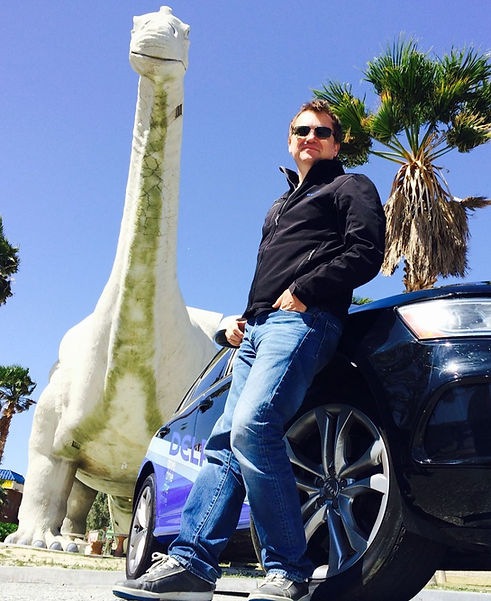
2015 SF to NYC Coast to Coast Automated Drive


Electrification Technology
We offer support in Power Electronics (PE) design and vehicle systems integration for EV, HEV and new smart city mobility applications. Our footprint in Asia and Europe provides the necessary support and capabilities for technical, vehicle architecture, and global sourcing support from selection to management and quality assurance of components, sub-systems and electrification systems. A few things we have done in this area:
-
Strategy and Technology development support for EV development
-
Technology guidance during new EV/HEV product development
Our Team
We are a global team of highly-motivated individuals from diverse cultural backgrounds, usually working together in the Singapore-based office and sometimes operating together from various locations around the world. The team has extensive experience in all domains required to implement new urban automated mobility and many years of executive automotive experience implementing automated driving technologies, pilots and automotive electrification in the US, Europe and Asia.

Strategic development of organization capability
Product Engineering in today’s world is a global activity with fast changing technology and geo-political transformation. In light of this, a large part of footprint decision is driven by cost, talent availability and coordinated technology development.
With our decades of experience in managing global product engineering and successfully delivering local and global programs, we offer a holistic assessment and recommendation framework for development of organization capability. As part of this, we also consider supply chain, manufacturing and product integration complexity. This work is based on <booz allen….>. Here’s what we do
-
Technology Roadmap Development and Global Engineering Consulting
-
Enterprise Maturity Assessment in Process, Technology, Capability and Products
-
Footprint plan and CoE (Centers of Excellence) strategy for optimum talent utilization
-
IP Strategy

Latest Articles


